Ask a caregiver what an elderly parent living alone ate yesterday, and the honest answer is often “tea, biscuits and a bit of rice”. Not because anyone planned it that way. Cooking for one is tiring, appetite fades, and chewing gets harder.
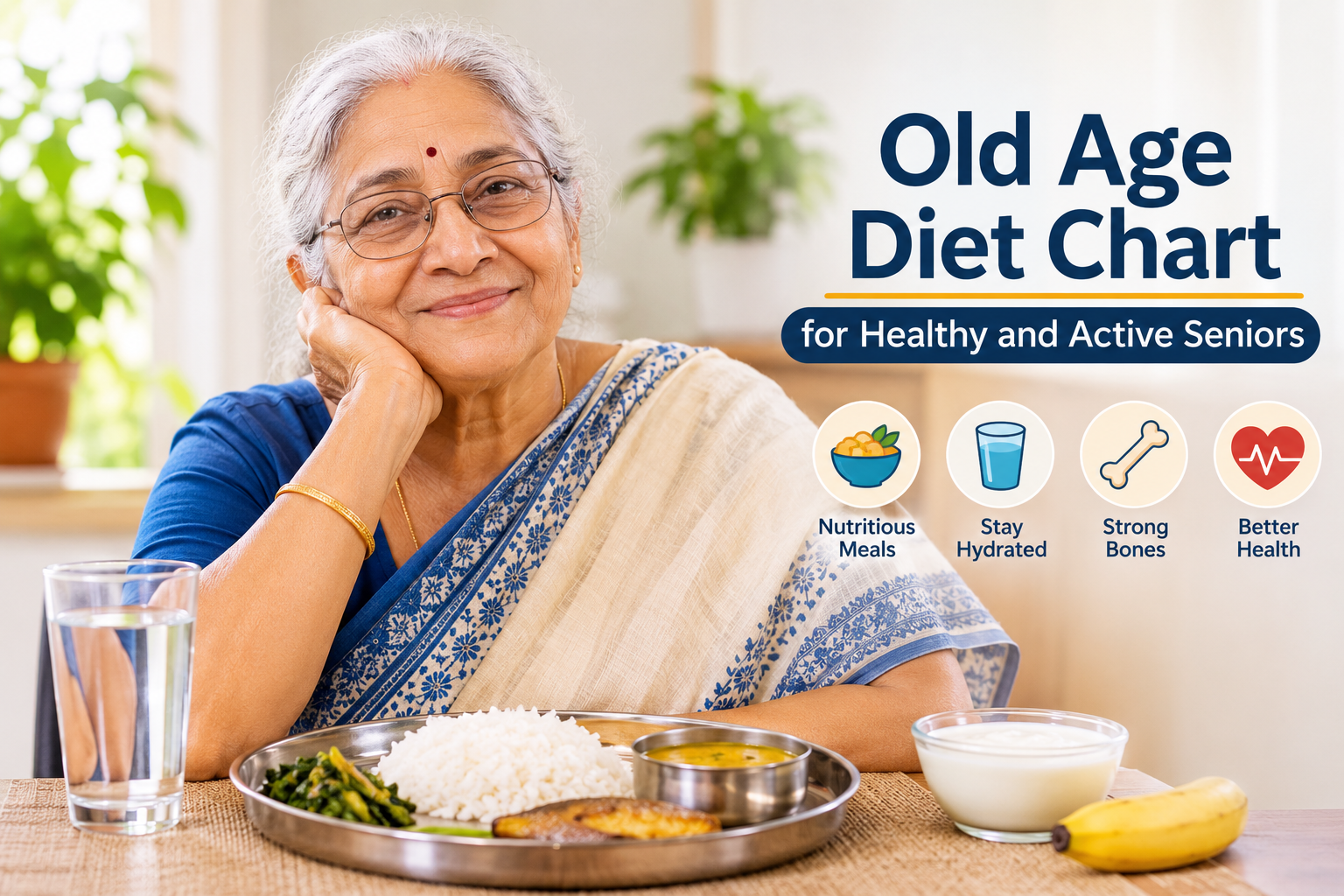
A good old age diet chart fixes this by making meals predictable. Below is a full-day plan built around foods most Bengali households already cook, with simple swaps for diabetes, blood pressure and chewing problems. It’s meant as a practical starting point, so check it with your parent’s doctor if they’re on regular medication.
Need help putting this into practice at home? Our team at Kurves Kare offers elder care services in Kolkata, including caregivers who cook and serve meals on schedule.
What Changes in Senior Nutrition After 60
Most people start needing a different approach to food somewhere in their sixties. The body needs fewer calories but just as much protein, sometimes more. Muscle loss with age, called sarcopenia, speeds up when protein runs low, and that’s one of the main reasons older adults fall.
A few other shifts matter for senior nutrition:
- Thirst signals weaken, so dehydration creeps in quietly, especially in Kolkata’s humid summers.
- Absorption of vitamin B12 drops. B12 deficiency can cause tiredness, numbness and memory problems that families mistake for “just ageing”.
- Calcium and vitamin D needs go up to protect bones.
- Digestion slows. Fried, heavy or very spicy food sits badly.
The Full-Day Old Age Diet Chart
This geriatric diet chart assumes a fairly healthy senior with no serious kidney or heart condition. Portions are small and frequent, because five modest meals work better than three large ones.
| Time | Meal | Bengali-friendly options |
| 6:30 to 7 am | Wake-up | A glass of lukewarm water, 4 to 5 soaked almonds (peeled if chewing is hard) |
| 8 to 8:30 am | Breakfast | Doi-chire with banana, or suji upma with vegetables, or 2 soft rotis with an egg or chhana |
| 11 am | Mid-morning | A bowl of papaya or a ripe banana, plus a glass of buttermilk (ghol) |
| 1 to 1:30 pm | Lunch | A small portion of soft rice, musur or moong dal, light fish jhol (rui or pabda), lau ghonto or shukto |
| 4:30 to 5 pm | Evening | Tea with less sugar, plus a small bowl of soaked muri with chopped cucumber, or a little chhana |
| 7:30 to 8 pm | Dinner | Moong dal khichdi with pumpkin and carrot, or 2 rotis with fish stew and a mild vegetable |
| 9:30 pm | Bedtime | Half a cup of warm milk, with a pinch of turmeric if they like it |
Keep water within reach all day. Six to eight glasses is a reasonable target for most seniors, unless a doctor has asked for a fluid limit.
Why fish and dal earn their place
Rui, pabda, tangra and bhetki are easy to digest and rich in protein. Bones are the real risk, though. Choose fillet pieces or carefully pick bones out before serving, because a fish bone caught in the throat is a common emergency with elderly parents eating alone. Dal twice a day adds protein for parents who eat little fish or are vegetarian.
Small habits that make the plan work
Serve dinner by 8 pm so there’s time to digest before bed. Soft does not have to mean bland: a little ginger, jeera or fresh coriander keeps food appetising. And don’t remove all treats. A spoon of mishti doi on a good day keeps meals enjoyable, which matters when appetite is already low.
Adjusting the Diet Plan for Old Age with Health Conditions
One chart can’t suit everyone. Here’s how we’d adapt this diet plan for old age for the most common situations.
Diabetes. Cut the rice portion and add more vegetables and dal. Swap muri for a handful of roasted chana. Choose foods with a lower glycemic index, skip the banana at breakfast on high-sugar days, and keep rosogolla and sandesh for rare occasions.
High blood pressure. Salt is the main issue. Limit pickles, papad, shutki (dried fish) and packaged namkeen. Lemon juice and herbs help food taste fuller without extra salt.
Chewing or swallowing problems. Mash rice and dal together, cook vegetables until very soft, and choose fish jhol over fried fish. If coughing during meals is frequent, it may be dysphagia, and a doctor should assess it.
Kidney disease. Go easy on daab (tender coconut water), bananas and extra protein until a doctor gives specific limits. These are healthy for most seniors but can be risky with weak kidneys.
Common Mistakes in a Diet Plan for Old People
The same mistakes show up again and again in homes we visit:
- tea and biscuits standing in for a proper evening meal
- far too much rice and very little protein on the plate
- skipping breakfast because “I’m not hungry in the morning”
- waiting until thirsty to drink water
- cooking once and reheating the same dish for two days
Most of these happen because the person cooking is tired, or the parent lives alone. A diet plan for old people only works if someone actually prepares and serves it. That’s where a trained home care assistant helps, by cooking fresh meals, reminding about water and keeping track of appetite changes.
For Families Living Away from Parents
If you’re abroad or in another city, you can’t check every plate. Share this old age diet chart with whoever cooks at home, and ask for a quick photo of lunch now and then. Our guide on managing elderly parents alone from abroad covers more practical systems for staying involved from a distance.
Frequently Asked Questions
What is the best diet for an 80 year old?
Small, soft, protein-rich meals spread across the day, with plenty of fluids. Dal, fish, eggs, curd and cooked vegetables cover most needs in an Indian home.
How many times a day should elderly people eat?
Five times works well for most seniors: breakfast, mid-morning snack, lunch, an evening snack and an early dinner.
Is rice bad for old people?
No. Rice is easy to digest and suits Bengali seniors well. Keep portions moderate, especially with diabetes, and pair it with dal or fish rather than eating it alone.
How much protein does an elderly person need?
Many doctors suggest around 1 gram per kg of body weight daily for healthy older adults, a little higher than for younger people. Those with kidney problems need a doctor’s guidance.
What should elderly people avoid eating?
Deep-fried snacks, very salty foods like pickles and papad, too many sweets, and fish with small bones if they eat alone.
Can a geriatric diet chart help with weakness?
Often, yes. Low protein, B12 deficiency and dehydration are common causes of weakness in seniors, and better meals address all three. Weakness that persists should still be checked by a doctor.
Need Someone to Follow the Plan at Home?
Start with one change this week. If your parent skips breakfast, fix that first. If lunch is just rice and potato, add dal and fish. Small, steady improvements beat a perfect chart that nobody follows.
If cooking and serving every meal is the hard part, Kurves Kare can place a trained caregiver who handles meals, medicines and daily routines. Get in touch with our team and tell us about your parent’s needs. We’ll suggest a care plan that fits.