Dead Body Vehicle in Kolkata | Types, Costs, and How to Book One in an Emergency
When a family loses someone, the very first practical decision they face is arranging a dead body vehicle to move the deceased from the hospital, home, or mortuary to the cremation ground or burial site. In a city as large and spread out as Kolkata, this isn’t always straightforward — timing, distance, and traffic all play a part, and most families are dealing with this for the first time while already grieving. This guide walks through the types of vehicles available, what they typically cost, and how to book one quickly when time matters most.
What Is a Dead Body Vehicle?
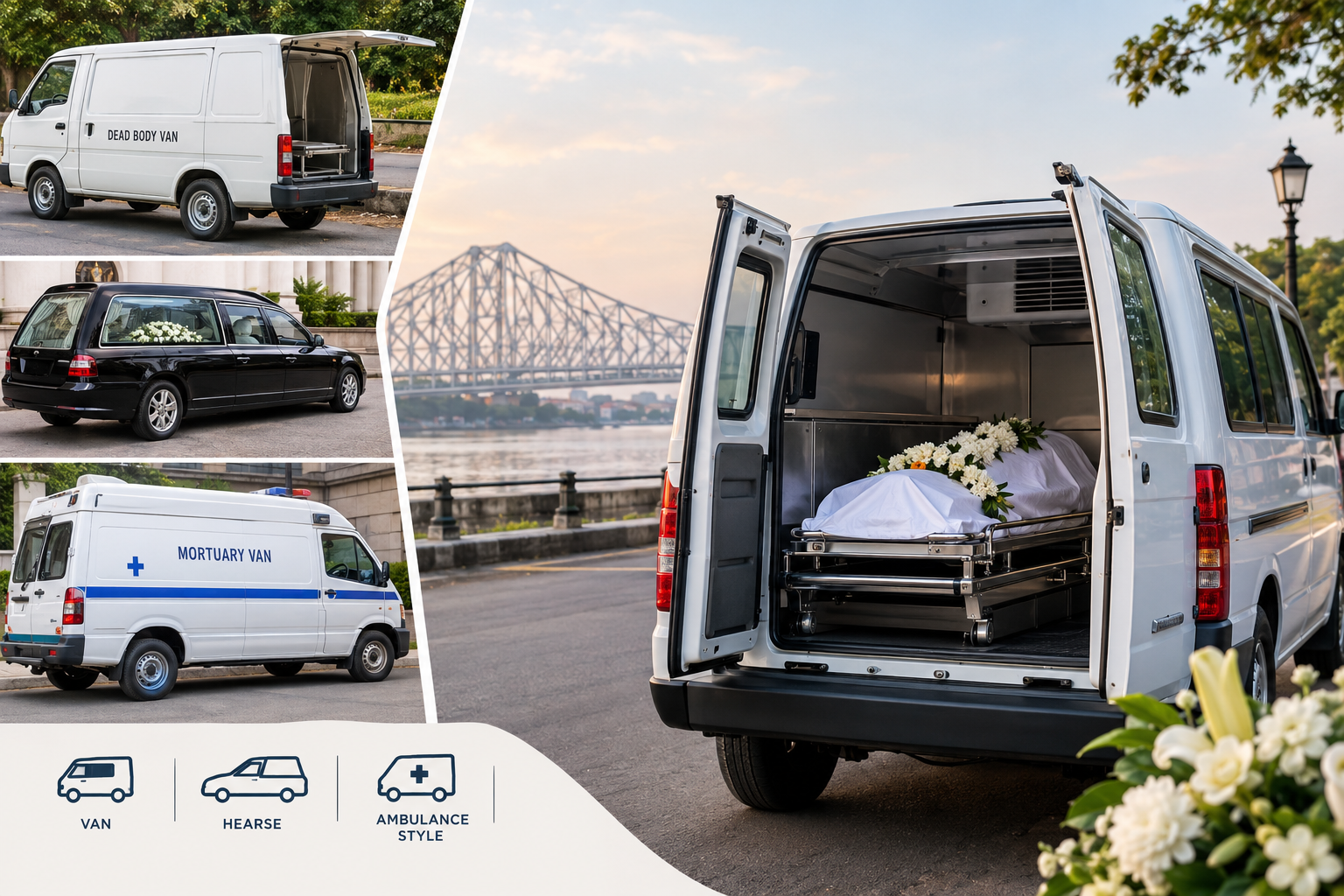
A dead body vehicle is any vehicle specifically fitted to transport a deceased person with dignity, usually equipped with a stretcher, a cooling unit or ice box, and enough space for a few family members to travel along. Depending on the provider, you’ll hear it called a dead body car, a hearse, or a mortuary van — the terms are mostly interchangeable in everyday use, though each points to a slightly different build.
Types of Dead Body Vehicles Available in Kolkata
Kolkata has a mix of government, hospital-affiliated, and private operators offering body transport, and the vehicle you get depends heavily on who you book through.
Dead Body Carrying Van
This is the most commonly booked option for local transfers. A dead body carrying van is typically a modified van with a flat stretcher bed, basic refrigeration or ice packing, and room for the body to lie flat during transit. Most funeral service providers keep a few of these on standby specifically for last-minute bookings.
Dead Body Car (Hearse)
A dead body car, closer to what’s traditionally called a hearse, is built with a more finished interior and is often preferred for longer processions or when the family wants a more formal, respectful presentation during the final journey.
Ambulance-Style Mortuary Vehicles
Some hospitals and private services use converted ambulances for this purpose. These come with stronger cooling systems, which matters if the vehicle needs to travel a longer distance or if there’s a delay before cremation.
- Government hospital mortuary vans (often free or subsidised, but waiting times can be long)
- Private dead body car service providers (faster response, higher cost)
- NGO or community-run vehicles (frequently free, availability varies by area)
Cost of Booking a Dead Body Vehicle in Kolkata
Pricing isn’t standardised across the city, so costs shift depending on the provider, distance, and vehicle condition. As a rough guide:
- Local transfers (within 10–15 km): Often between ₹1,500 and ₹3,500
- Vehicles with cooling or ice box facility: Usually cost more than a basic van
- Late-night or early-morning bookings: May carry a small additional charge
- Long-distance transport (outstation): Priced per kilometre, worth confirming upfront
These figures are indicative rather than fixed. Always confirm the exact quote with the provider before booking, since tolls, waiting time, and vehicle type can all shift the final number.
How to Book a Dead Body Vehicle in an Emergency
Because this need almost always comes up without warning, most families don’t have time to compare options.
- Call ahead, even from the hospital. Most funeral services Kolkata families rely on can dispatch a vehicle within 30–60 minutes of a confirmed booking.
- Confirm the vehicle type before it arrives. Ask whether it’s a basic dead body carrying van or one with cooling facilities, especially if cremation may be delayed.
- Have the destination ready. Whether it’s a crematorium, burial ground, or the family home for final rites, giving the driver a clear address speeds things up.
- Ask about additional support. A good dead body car service will often help coordinate the rest of the arrangements too, not just the drive.
Dead Body Carrying Van vs Ambulance: What’s the Difference?
Families sometimes assume any ambulance can double as a dead body vehicle, but the two aren’t quite the same. An ambulance is built and licensed for living patients, carrying life-support equipment a mortuary van doesn’t need. A dedicated dead body carrying van, on the other hand, is designed purely for the safe, dignified transport of the deceased. If you’re unsure which one your situation calls for, this comparison of a hearse van vs ambulance for funeral transport breaks down the practical differences.
Why Work With a Professional Dead Body Car Service
Beyond just the vehicle, an experienced dead body car service can take real pressure off a family during an already difficult time — coordinating timing with the crematorium, helping with paperwork, and making sure the deceased is transported respectfully from start to finish. Many established funeral services Kolkata families trust bundle this directly into a wider package, which saves everyone from coordinating separate vendors. If you’re arranging the full set of funeral rites alongside transport, it’s worth looking at a complete funeral arrangement service in Kolkata, which typically covers everything from the vehicle to the last rites themselves.
Frequently Asked Questions
How quickly can a dead body vehicle be arranged in Kolkata?
Most private providers can dispatch one within 30 to 60 minutes of a confirmed booking, depending on location and time of day.
Is a dead body carrying van different from a regular ambulance?
Yes. An ambulance is equipped for living patients needing medical support, while a dead body carrying van is built specifically for transporting the deceased.
How much does a dead body car service typically cost in Kolkata?
Local transfers usually range from ₹1,500 to ₹3,500, depending on distance, vehicle type, and any cooling facilities required.
Do government hospitals provide free dead body transport?
Many government hospitals offer subsidised or free mortuary van services, though availability and waiting times vary.
What should I check before booking a dead body vehicle?
Confirm the vehicle type, cooling facilities if needed, expected arrival time, and total cost before it’s dispatched.