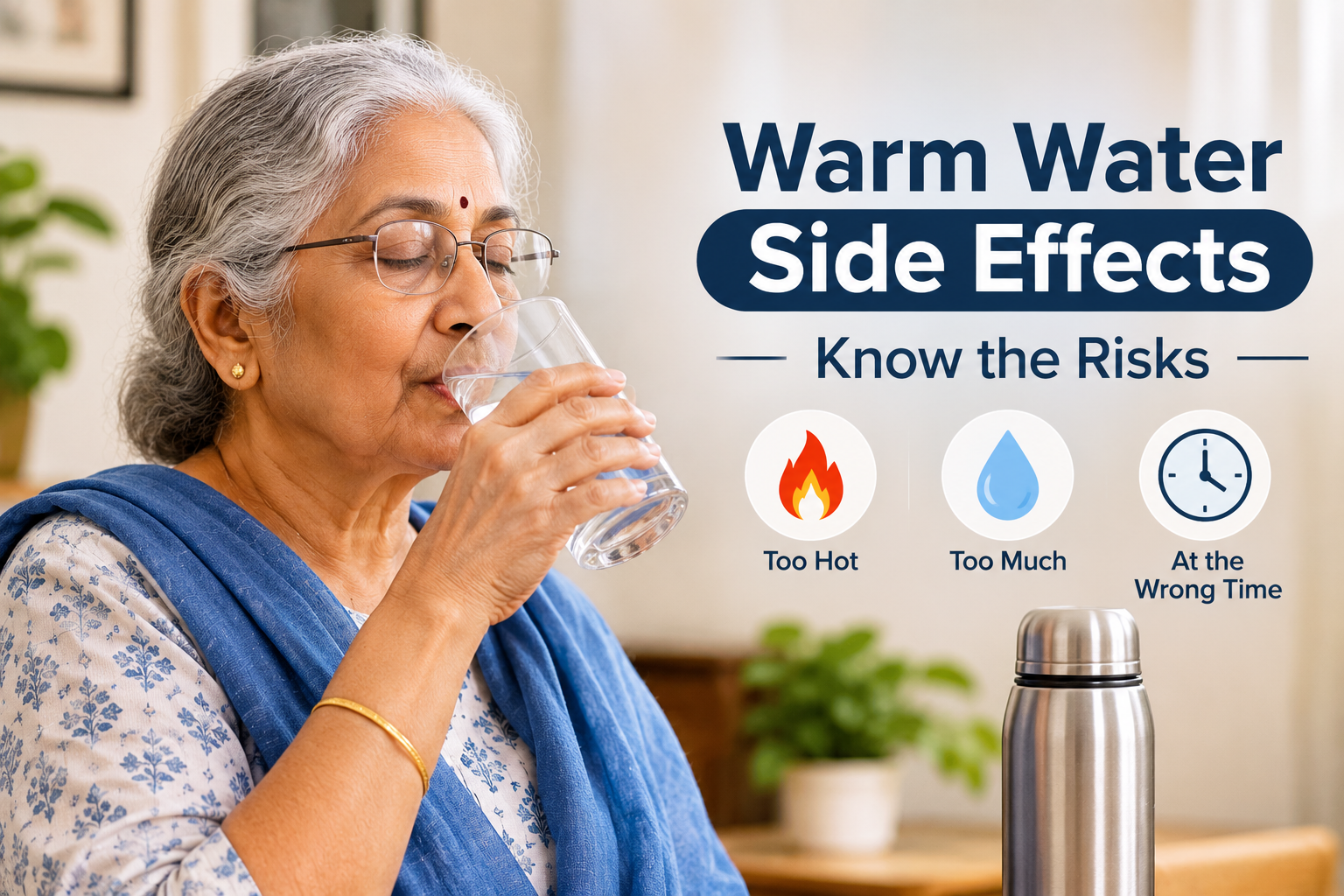
In plenty of Kolkata homes, the day starts with a steel flask of warm water on the bedside table. Grandparents swear by it for digestion, sore throats and “clearing the system”. For most people, it’s a harmless habit. But the side effects of drinking warm water are real in a few situations, and they tend to show up most in older adults and people managing long-term illness.
This guide explains what can go wrong, why, and who should be careful about the temperature, the amount and the timing.
Is Warm Water Actually Bad for You?
No, not for most healthy adults. Warm water hydrates you just as well as cold water, and many people find it easier to drink in winter or when they have a cold. The problems almost always come from one of three things: water that’s too hot, drinking too much of it, or drinking it at the wrong time for a particular health condition.
So the real question isn’t “warm or cold?”. It’s “how hot, how much, and for whom?”
6 Side Effects of Drinking Hot Water Daily
1. Burns to the mouth and throat
The lining of your mouth and food pipe is delicate. Water that feels “just right” to one person can scald another, especially if they gulp it. Repeated minor burns may not hurt much at the time, but they irritate the tissue.
2. A link with oesophageal cancer when it’s very hot
In 2016, the International Agency for Research on Cancer classified drinking very hot beverages above 65°C as “probably carcinogenic”, based on studies linking the habit with oesophageal cancer. The risk is about temperature, not water itself. Letting your cup cool for a few minutes removes most of the concern.
3. Drinking more than your body can handle
Some people drink warm water all day because they believe it “flushes toxins”. Too much fluid in a short time can dilute sodium in the blood, a condition called hyponatraemia. Mild cases cause headache, nausea and confusion. Severe water intoxication is rare but can be dangerous, and older adults are more vulnerable because their kidneys clear water more slowly.
4. Night-time bathroom trips
A large glass of warm water before bed often means waking up to urinate, known as nocturia. For a 30-year-old, that’s just broken sleep. For an 80-year-old walking to the bathroom in the dark, it’s one of the most common setups for a fall.
5. Tooth sensitivity
People with worn enamel or gum recession may feel a sharp twinge with hot drinks. Adding lemon to warm water every morning, a popular habit, can wear enamel further over time.
6. Chemicals from the container
Heating water in plastic bottles or pouring very hot water into low-grade plastic containers may cause chemicals to leach into the water. Steel, glass or ceramic is the safer choice for a daily flask.
Hot Water Disadvantages for Older Adults
Most of the hot water disadvantages listed above get stronger with age, and for a few clear reasons.
- Reduced sensation. Seniors with diabetes, past stroke or peripheral neuropathy may not feel how hot a cup is until it’s already burned them.
- Shaky hands make spills more likely, and a spilled cup of very hot water on the lap can cause a serious skin burn.
- Older kidneys handle sudden large volumes of fluid less efficiently.
- Many seniors take diuretics or blood pressure medicines that already affect fluid and salt balance.
A situation our caregivers often notice is an elderly parent who’s been told to “drink lots of warm water” by a well-meaning relative, while their doctor has actually asked them to limit fluids. Those two pieces of advice can’t both be followed.
If you’re seeing confusion, frequent stumbles or changes in eating and drinking, it may be time to look at the broader signs your elderly parent needs help at home.
Who Should Be Careful With Warm Water Side Effects
Some people should check with their doctor before making warm water a large daily habit.
People on fluid restriction
Patients with heart failure, advanced kidney disease or liver disease are often given a daily fluid limit. Every glass of warm water counts towards it, including the “healthy” morning one.
People with swallowing difficulties
Anyone with dysphagia, common after stroke and in later stages of Parkinson’s or dementia, may need thickened liquids. Thin water of any temperature can go down the wrong way and cause choking or chest infections.
People with dementia or reduced awareness
They may forget they’ve already had several glasses, or not recognise that a cup is too hot. Supervision helps more than any rule.
Patients receiving palliative care
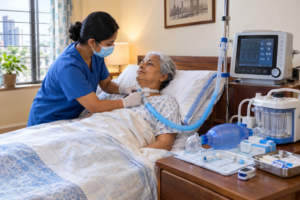
Comfort matters most here, and needs change week by week. Fluid intake should follow the care team’s guidance. Families arranging specialized palliative care at home can ask the nurse to set a simple daily plan for drinks.
How to Drink Warm Water Safely
The habit is fine for most people. A few small adjustments make it safer.
- Aim for lukewarm, roughly the temperature you’d use to test a baby’s bottle on your wrist. If it makes you sip carefully, it’s too hot.
- Spread fluids through the day instead of drinking a litre at once.
- Stop large drinks about two hours before bed, especially for seniors.
- Use a steel or glass flask with a secure lid and a non-slip base.
- Follow any fluid limit your doctor has set, even if it feels like too little.
For parents living alone, trained caregivers through home care assistance can manage hydration schedules, medicine timings and safe night-time routines without taking away their independence.
Frequently Asked Questions
Is it safe to drink warm water every day?
Yes, for most healthy people. The main risks come from water that’s too hot or from drinking far more than you need.
What temperature of water is safe to drink?
Below about 60°C is generally comfortable and safe. Very hot drinks above 65°C are the ones linked with higher oesophageal cancer risk.
Can drinking warm water cause low sodium?
Only if you drink large amounts in a short period, or if you have heart, kidney or hormonal conditions that affect fluid balance. Older adults on diuretics should be especially careful.
Is warm water good for elderly people at night?
A few sips are fine. A full glass right before bed raises the chance of night-time bathroom trips and falls, so it’s better to drink earlier in the evening.
Does warm water help digestion?
Many people find it soothing, and it can help mild constipation alongside fibre and movement. It isn’t a cure for ongoing digestive problems, which need a doctor’s review.
What are the side effects of drinking hot water daily on an empty stomach?
For most people, none. People with sensitive teeth or acid reflux may feel discomfort if it’s very hot, so lukewarm is the better choice.
Help for Families Caring for Ageing Parents
If your parent is healthy and enjoys their morning flask, let them keep it, just make sure it’s lukewarm and not too close to bedtime. If they’re on fluid restrictions, have trouble swallowing or live alone with memory problems, everyday habits like this need a closer eye. Kurves Kare’s elder care service in Kolkata supports families, including those living abroad, with trained caregivers who handle hydration, meals, medicines and safety at home. Get in touch with our team to set up the right level of care for your parent.