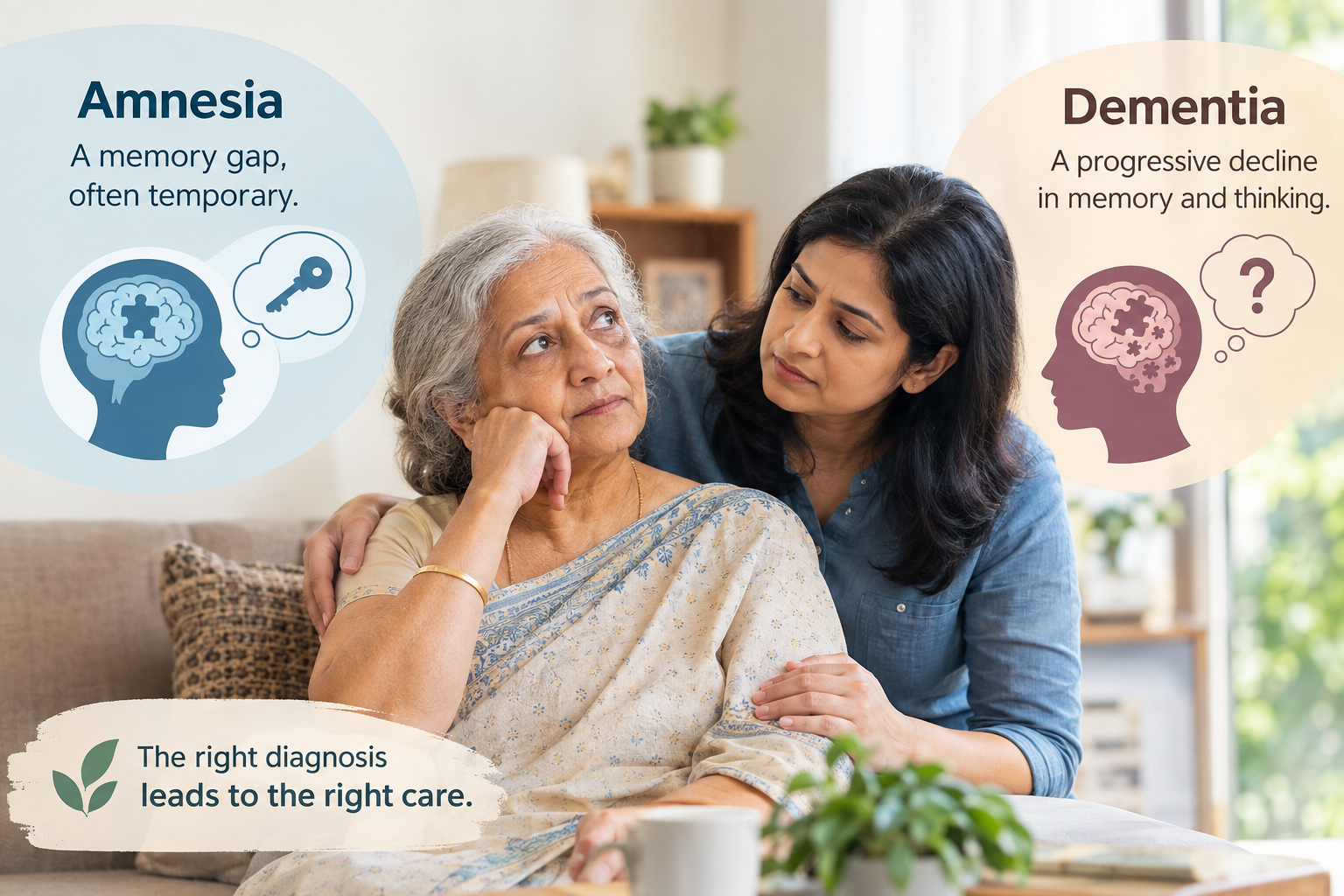
Amnesia vs Dementia and What It Means for Your Aging Parent
Amnesia is the loss of specific memories, usually caused by injury, illness, or extreme stress, and it doesn’t always worsen over time. Dementia is an ongoing decline in memory, thinking, and reasoning caused by an underlying brain condition such as Alzheimer’s, and it typically gets worse over months or years. If you’re weighing amnesia vs dementia because your parent has been forgetting things more often, the distinction affects who you consult, how fast you act, and what kind of support you look for.
Two Kinds of Memory Loss, One Common Worry
Most families notice a parent repeating a question or misplacing keys and assume the worst. In reality, memory changes come in different forms, and not every lapse points to the same condition. Some memory loss is temporary and tied to a single event. Some is part of a slow, progressive disease. Knowing which one you’re dealing with changes everything about the next step you take.
What Is Amnesia?
Amnesia is a gap in memory, often linked to a specific cause: a head injury, a stroke, a seizure, heavy alcohol use, or intense emotional trauma. It can affect the ability to recall past events (retrograde amnesia) or to form new memories after the triggering event (anterograde amnesia). Importantly, amnesia usually leaves other mental abilities, like reasoning, language, and personality, largely intact. Many cases stabilize or even improve with treatment and time.
What Is Dementia?
Dementia isn’t a single disease but an umbrella term for a group of conditions, including Alzheimer’s disease, vascular dementia, and Lewy body dementia, that cause a gradual decline in cognitive function. Unlike amnesia, dementia rarely stays limited to memory. It tends to affect judgment, language, mood, and eventually the ability to carry out daily tasks independently. The decline is typically slow and progressive rather than sudden.
Amnesia vs Dementia: The Real Difference Between Dementia and Amnesia
When you line them up side by side, the difference between dementia and amnesia becomes clearer:
- Onset: Amnesia often appears suddenly, right after an injury or traumatic event. Dementia develops gradually, sometimes over years.
- Cause: Amnesia is usually linked to a specific incident. Dementia stems from ongoing changes or damage in the brain.
- Scope: Amnesia affects specific memories or time periods. Dementia affects overall cognitive function, including memory, language, and reasoning.
- Progression: Amnesia can stabilize or improve. Dementia is progressive and generally worsens over time.
- Other symptoms: Amnesia typically leaves personality and daily functioning intact. Dementia often changes mood, behavior, and independence.
The Amnesia and Dementia Difference Families Actually Notice at Home
On a day-to-day level, the amnesia and dementia difference shows up in small but telling ways:
- Repeating a question once or twice (common with stress or minor amnesia) versus asking the same question every few minutes
- Forgetting where the car keys are versus forgetting how to use them
- Struggling to recall a recent conversation versus struggling to follow one at all
- Getting momentarily confused in a new place versus getting lost in a familiar one, like their own neighborhood
If the pattern looks like the second half of each example, it’s worth taking seriously.
Why This Difference Matters for Your Aging Parent in Kolkata
A correct read on amnesia vs dementia shapes the entire care plan that follows. Amnesia might call for neurological evaluation and rest, while dementia calls for a longer-term strategy involving medical management, home adjustments, and often, additional support at home. Families in Kolkata are also beginning to pay attention to at what age elderly parents in Kolkata should be monitored more closely for these changes, since early attention makes a real difference in how the condition is managed.
When to Consider Professional Senior Care Support
Not every memory lapse needs a care team, but certain signs suggest it’s time to bring in professional help:
- Memory issues are affecting safety, like leaving the stove on or wandering outside alone
- Your parent is becoming withdrawn, anxious, or uncharacteristically irritable
- Daily tasks like bathing, dressing, or managing medication are being missed or done incorrectly
- You, as a family caregiver, are feeling stretched too thin to manage alone
This is exactly where Top Senior Care Services in Kolkata come in, offering trained support that adapts to whether your parent is dealing with amnesia, dementia, or general age-related memory changes, without uprooting them from home.
Frequently Asked Questions
Is amnesia the same as dementia?
No. Amnesia is a memory gap, often tied to a single cause, while dementia is a progressive decline affecting memory and several other cognitive functions.
Can amnesia turn into dementia?
Not typically. They stem from different causes, though both can occur in the same person if there’s an underlying condition affecting the brain more broadly.
Is memory loss in elderly parents always a sign of dementia?
No. Occasional forgetfulness is a normal part of aging. Frequent, worsening memory loss that affects daily life is what warrants a medical evaluation.
When should I take my parent to a doctor for memory concerns?
As soon as memory lapses start affecting safety, daily routines, or become noticeably more frequent, rather than waiting for things to get worse.
Can dementia be managed at home in Kolkata?
Yes, many families manage early to moderate dementia at home with the right support system, including trained caregivers and a structured daily routine.