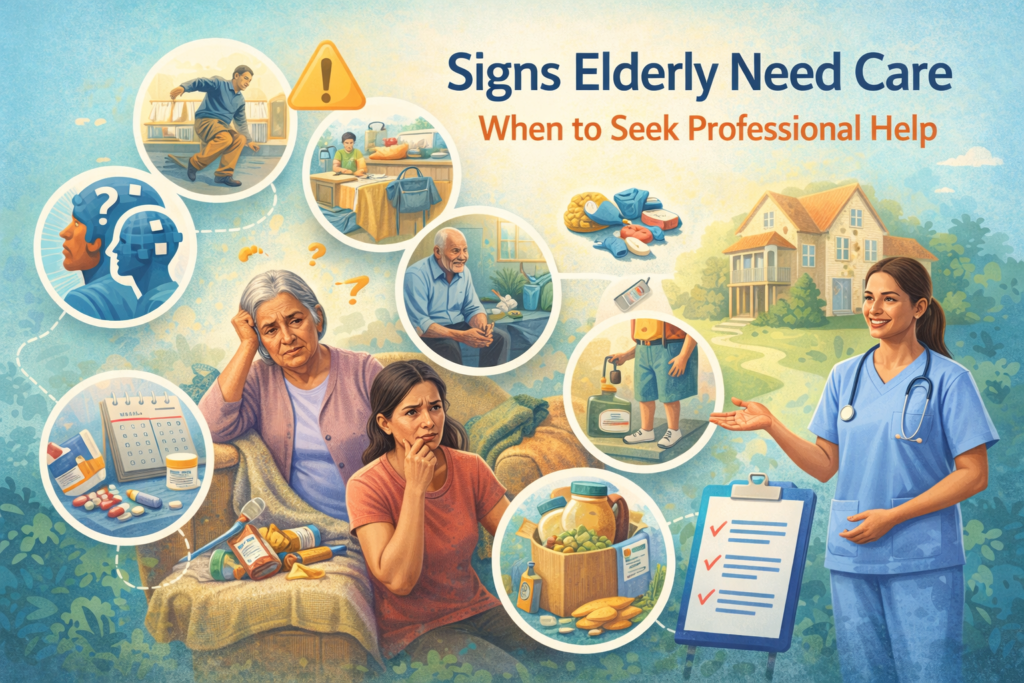
Signs Your Loved One Needs Professional Elder Care Support
Signs elderly need care: When to Seek Professional Help Caring for aging parents or loved ones is a responsibility that often comes with emotional and practical challenges. Recognizing the Signs elderly need care early can make a significant difference in ensuring their safety, comfort, and overall well-being. Many families delay seeking help simply because they are unsure when seniors need care or what changes to look for. In this guide, we’ll walk you through the most important elderly care warning signs, helping you make informed decisions before a situation becomes critical. Understanding When Seniors Need Care Aging is natural, but certain changes go beyond normal aging. Knowing when seniors need care involves identifying patterns rather than isolated incidents. Occasional forgetfulness or fatigue may not be alarming, but consistent decline is a sign that professional support may be required. Families often overlook early signs of aging parents needing help, assuming they can manage independently. However, timely intervention can prevent accidents, hospitalizations, and emotional distress. Key Elderly Care Warning Signs You Should Not Ignore 1. Difficulty with Daily Activities One of the earliest signs your parent needs professional care is struggling with routine tasks such as: Bathing and personal hygiene Cooking or preparing meals Managing medications Housekeeping If your loved one requires frequent daily living assistance for seniors, it may be time to consider professional support. 2. Noticeable Memory Loss and Confusion Occasional forgetfulness is normal, but consistent memory loss in seniors can be concerning. Warning signs include: Forgetting familiar names or places Repeating the same questions Missing appointments Getting confused about time or location These senior health decline signs may indicate cognitive issues that need expert care and supervision. 3. Mobility Issues and Increased Risk of Falls Physical health decline is another major factor. Mobility issues in elderly individuals can lead to serious injuries if not addressed. Look out for: Difficulty walking or standing Frequent falls or fear of falling Reliance on furniture for support Professional caregivers can assist with movement and reduce the risk of accidents at home. 4. Poor Personal Hygiene and Living Conditions A decline in personal grooming or a messy living environment is often overlooked but is a critical indicator. These elderly care warning signs may include: Wearing unclean clothes Unwashed dishes piling up Unpleasant body odor Neglected home maintenance Such changes often signal that your loved one is struggling to manage independently. 5. Changes in Mood, Behavior, or Personality Emotional well-being is just as important as physical health. Watch for: Sudden mood swings Withdrawal from social activities Increased anxiety or depression Irritability or confusion These can be subtle signs of aging parents needing help that require both emotional and medical support. 6. Unexplained Weight Loss or Poor Nutrition Nutrition plays a vital role in senior health. If your loved one is: Skipping meals Losing weight unexpectedly Eating expired or unhealthy food …it may indicate they need daily living assistance for seniors to maintain a proper diet. 7. Medication Mismanagement Missing doses or taking incorrect medications can have serious consequences. Signs include: Confusion about prescriptions Unopened or overused medicines Frequent health complications This is a strong indication that signs your parent needs professional care are becoming evident. Why Early Intervention Matters Ignoring early senior health decline signs can lead to emergencies. Timely care ensures: Better quality of life Reduced hospital visits Emotional support and companionship Safety and supervision If you are unsure about care options, understanding the difference between full-time and part-time support can help. Here’s a helpful guide on to make an informed decision. If you’re unsure about the right level of care, understanding the difference between 24×7 elder care vs part-time care can help you make a more informed decision. Choosing the Right Elder Care Support Once you identify the Signs elderly need care, the next step is choosing the right service. Professional caregivers offer: Personalized care plans Assistance with daily activities Medical and emotional support Companionship Families looking for reliable options often consider an Elder Care Service in Kolkata that provides trained caregivers and tailored solutions. Choosing the Best Elder Care in Kolkata ensures your loved one receives compassionate and professional attention. Expert Insights on Recognizing Care Needs Understanding these warning signs from a professional perspective can help families take timely action. According to a detailed resource on signs your parent needs professional care, early identification of physical, emotional, and behavioral changes plays a crucial role in preventing serious health complications. How Professional Elder Care Makes a Difference Professional care is not just about medical assistance—it’s about improving overall well-being. It helps by: Maintaining dignity and independence Providing emotional companionship Ensuring safety at all times Supporting family members with caregiving responsibilities Recognizing when seniors need care and acting promptly can transform their quality of life. Identifying the Signs elderly need care is essential for ensuring your loved one’s safety, health, and happiness. From memory loss in seniors to mobility issues in elderly, these warning signs should never be ignored. Taking timely action and choosing the right care solution—whether through family support or professional services—can make a meaningful difference. Always remember, seeking help is not a sign of failure but a step toward better care and comfort for your loved one. FAQs 1. What are the most common signs elderly need care? Common signs include memory loss, mobility issues, poor hygiene, difficulty with daily tasks, and noticeable behavioral changes. 2. When should I consider professional elder care for my parents? You should consider it when daily activities become difficult or when safety, health, or emotional well-being is at risk. 3. How do I know if my parent needs daily living assistance? If they struggle with bathing, cooking, medication management, or mobility, they may need daily assistance. 4. Is memory loss always a sign of serious illness in seniors? Not always, but consistent or worsening memory loss should be evaluated by professionals. 5. How can professional elder care improve quality of life? It provides safety, companionship, medical support, and helps seniors maintain independence and dignity.